
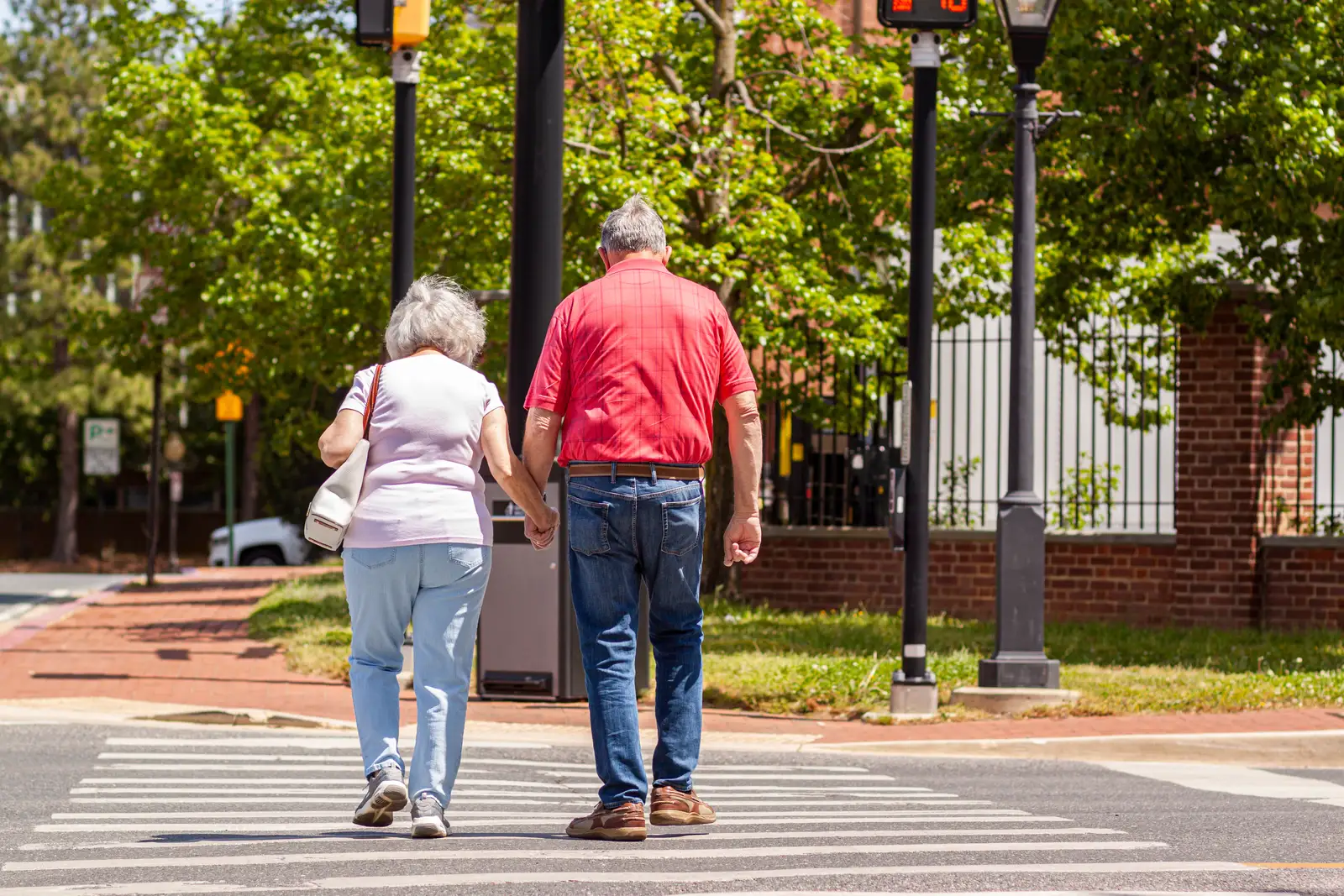
A walk to lunch on Dauphin Street, an evening stroll in downtown Fairhope, or a quick trip across a parking lot in Gulf Shores can change in an instant when a driver fails to stop. Pedestrians have no airbags, no seatbelts, and no steel frame to absorb the impact, so even a low-speed collision can cause broken bones, head trauma, or injuries that last a lifetime.
October is Pedestrian Safety Month, a fitting time to answer one of the most common questions our attorneys at Tobias & Comer Law hear: who is legally responsible when a car hits someone on foot? The answer is rarely as simple as pointing to the driver. Alabama's liability rules are among the strictest in the country for injured people, and the way a pedestrian injury claim is handled in its first days can determine whether the injured person recovers anything at all. Here is why these cases are more complicated than they appear, and why having an experienced attorney on your side makes such a difference.
Is the Driver Always at Fault When a Pedestrian Is Hit in Alabama?
Not automatically. Alabama law places real responsibility on drivers to watch for and avoid people on foot, but that does not make liability a given. Like other car accident cases, pedestrian claims often come down to what the driver was doing in the moments before impact and whether the evidence can prove it.
Proving fault takes far more than a police report. Witnesses remember events differently, the scene changes quickly, and the driver's insurance company begins building its own version of what happened almost immediately. At Tobias & Comer Law, our attorneys work to uncover what really happened so the responsible party, not the injured person, is held accountable.
Who Else Can Be Held Liable for a Pedestrian Accident?
In many cases, more than one party shares responsibility. An employer may be accountable when its driver strikes someone while on the job, which becomes especially relevant as delivery vans and commercial trucks crowd Mobile streets heading into the holiday season. A bar that kept serving a visibly intoxicated customer may face liability under Alabama's Dram Shop Act, an issue we address in our alcohol and drug impaired driving cases. A defective vehicle part, such as faulty brakes, can point responsibility toward a manufacturer. Poorly designed roads or broken crosswalk signals may even involve a government entity, and claims against cities and counties come with special notice requirements and much shorter deadlines.
Identifying every responsible party matters because a single driver's insurance policy is often far too small to cover the true cost of a serious injury. Other sources of coverage, including your own uninsured or underinsured motorist policy, may also come into play even though you were on foot. Sorting out which parties and policies apply is complex, and it is one of the first things our team looks at when we review a pedestrian case.
How Does Alabama's Contributory Negligence Law Affect Pedestrians?
This is where Alabama differs sharply from most of the country. Alabama follows pure contributory negligence, a rule shared by only a handful of jurisdictions. Under this rule, an injured person found even slightly at fault for an accident may be barred from recovering any compensation at all.
Insurance companies know this rule well. After a pedestrian accident, adjusters often look for any reason to shift blame to the injured person: crossing outside a crosswalk, wearing dark clothing at night, looking at a phone, or stepping into the road against a signal. A seemingly harmless comment in a recorded statement can become the foundation for denying the entire claim.
Alabama law does recognize limited exceptions to this harsh rule, but whether any of them apply depends heavily on the specific facts, the available evidence, and how Alabama courts have treated similar situations. This is not an area where injured people should try to argue their case alone. Our attorneys know how insurers build these blame-shifting arguments, and we know how to respond to them.
Why Should You Talk to a Lawyer Soon After a Pedestrian Accident?
Your health comes first, so get medical care right away, even if your injuries seem minor. After that, time works against you. Important evidence can disappear within days, insurance adjusters may call asking for a recorded statement, and legal deadlines can be much shorter than people expect depending on who is involved. Missing a deadline or saying the wrong thing early on can end a claim before it begins.
That is why the best step you can take is to speak with an attorney before you talk with any insurance company or sign any documents. An experienced lawyer can preserve evidence, handle communication with insurers, and evaluate every possible source of recovery while you focus on healing. If you lost a family member in a pedestrian accident, Alabama's wrongful death law follows its own unique rules, and our team can guide your family through that process with care and respect.
How Can Tobias & Comer Law Help After a Pedestrian Accident in Mobile?
At Tobias & Comer Law, we work each client's case personally, from start to finish. Our attorneys bring nearly 80 years of combined experience and have recovered over $100 million for injured people and families across Mobile and the Gulf Coast. We help clients throughout Mobile, Daphne, Spanish Fort, Fairhope, Foley, Gulf Shores, Orange Beach, Saraland, and Satsuma, and we handle pedestrian accident cases on a contingency basis, so you pay no fee unless we win. If you or someone you love was hurt by a driver, contact our firm for a free consultation. Call (251) 432-5001, or visit us at 1203 Dauphin Street in Mobile. We are real people helping real people, with compassion and respect.
Past results do not guarantee a similar outcome in future cases. Every case depends on its own facts. This article provides general information and is not legal advice.